Terminal Matters
Kinodynamic Planning with a Terminal Cost and Learned Uncertainty in Belief State-Cost Space
Worcester Polytechnic Institute · ELPIS Lab
Car parking with terminal cost
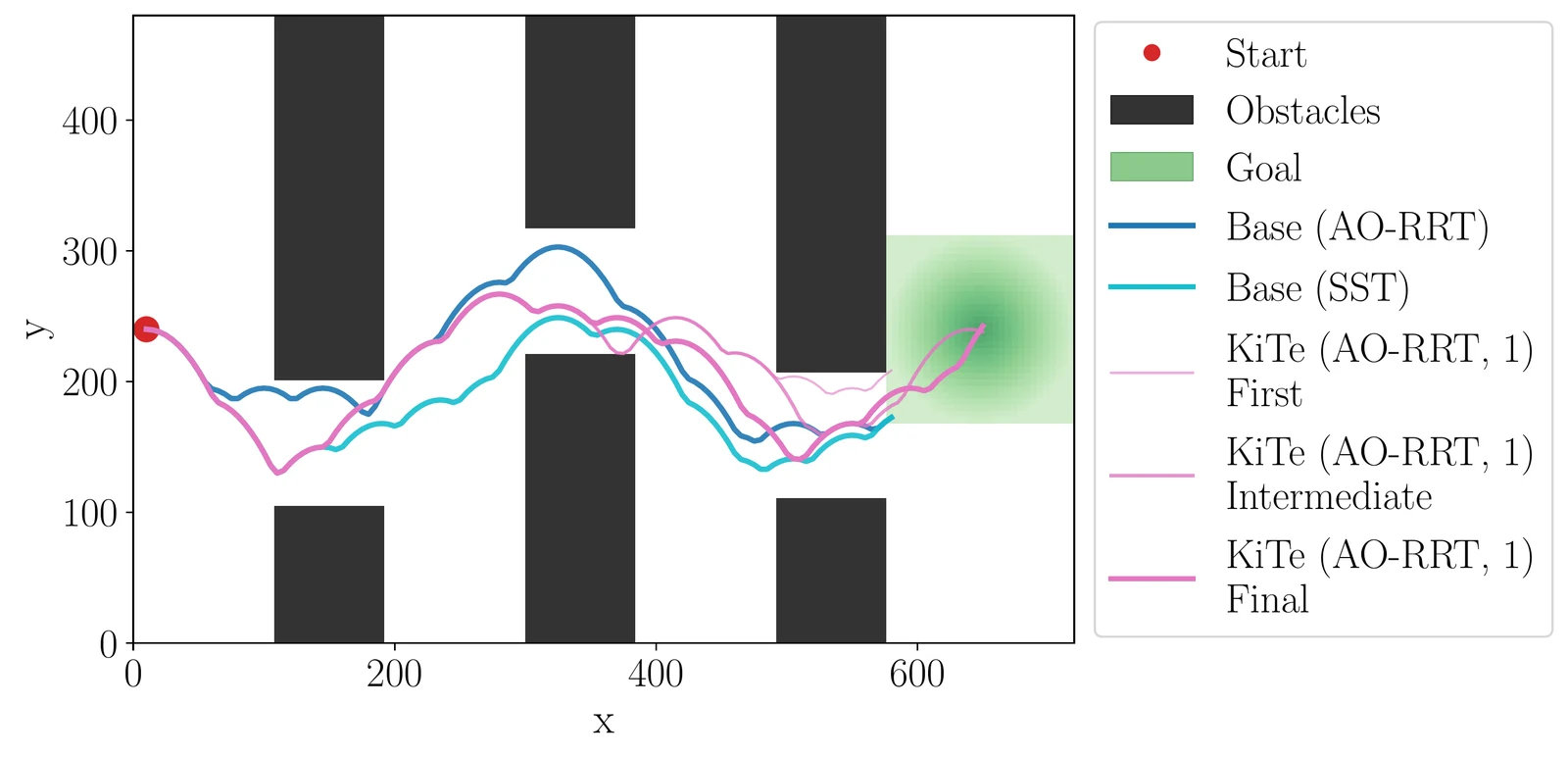
Terminal cost enables continuous optimization after finding a feasible solution.
Planar pushing with learned dynamics
Planning with learned dynamics and uncertainty to push an object reliably toward the goal.
Reaching the goal is not the whole objective
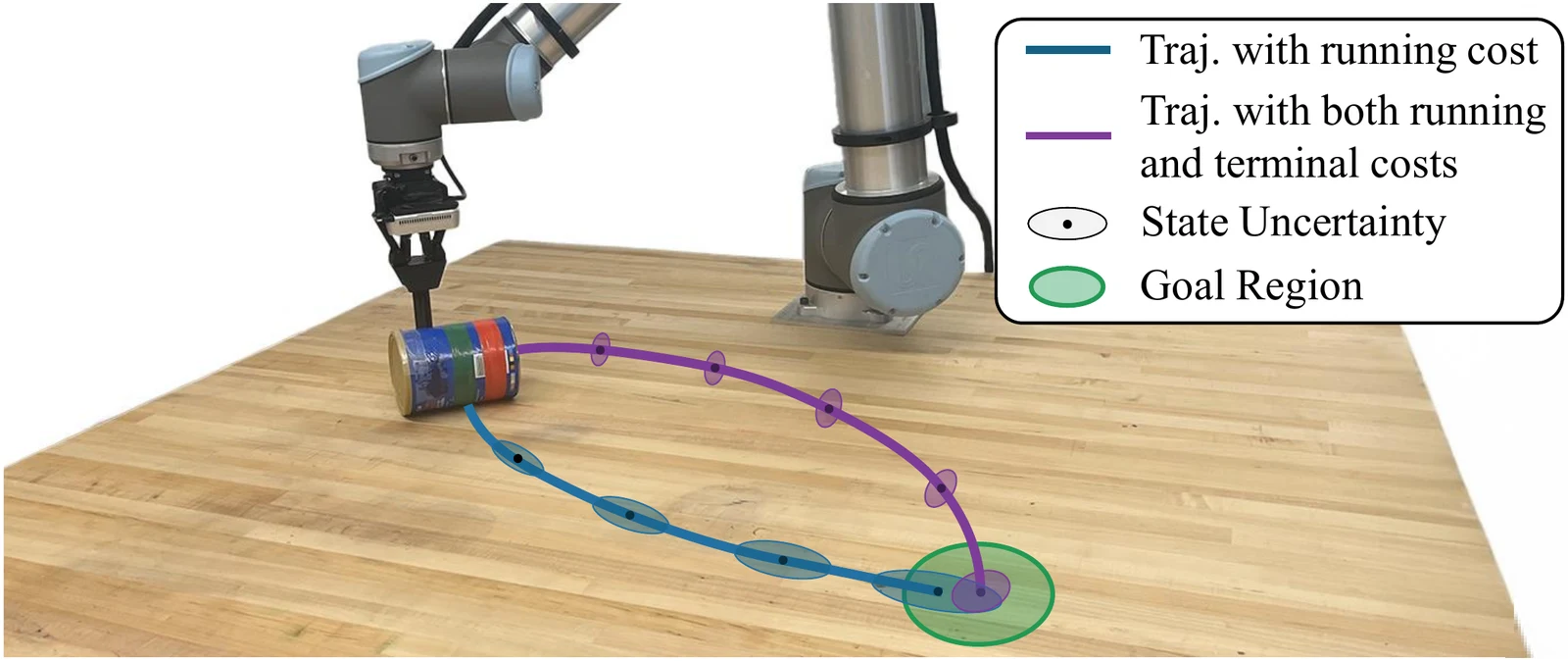
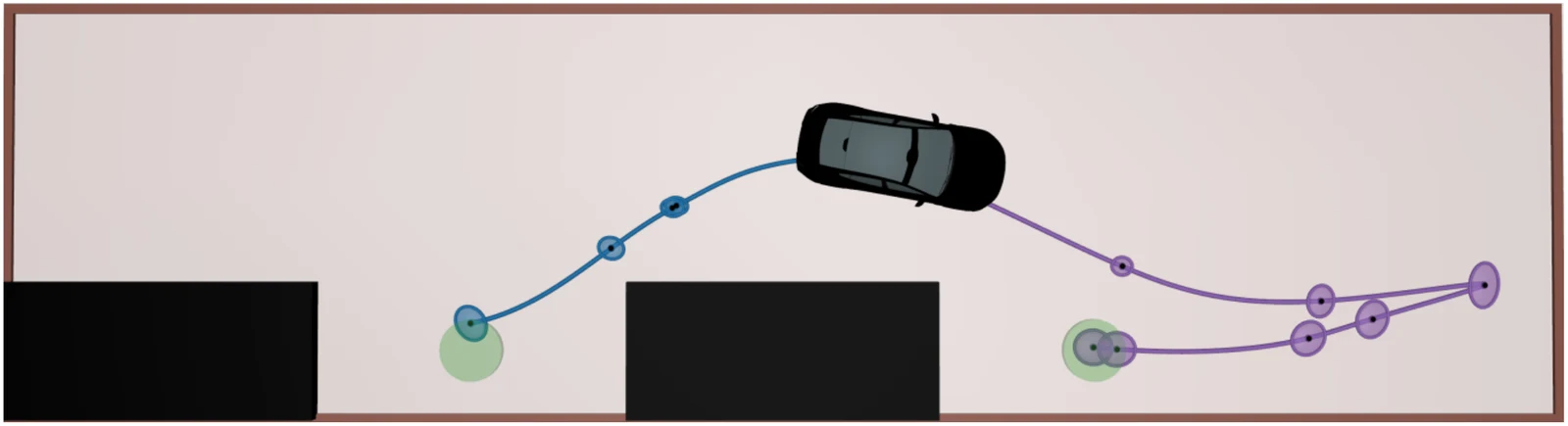
Sampling-based kinodynamic planners usually optimize costs accumulated along a trajectory and treat goal arrival as a feasibility check. Terminal-state quality can matter just as much: a goal may be preferable, closer to its center, or substantially more reliable under uncertainty. KiTe augments AO-RRT with an explicit terminal cost so the planner optimizes both how it moves and where its trajectory ends.
KiTe: Kinodynamic planning with a Terminal cost. The formulation preserves asymptotic optimality while supporting deterministic state space, belief space, goal preference, and goal-reaching reliability.
Add terminal quality to the planning objective


AO-RRT with a terminal cost
KiTe searches in the augmented state-cost space and updates the best cost using both accumulated running cost and terminal-state cost. The paper proves that AO-RRT remains asymptotically optimal under this augmented objective.
Belief-space extension
The same construction applies when each planning state is a belief distribution. KiTe propagates mean and covariance and preserves asymptotic optimality with respect to the belief-space objective.
A principled objective for goal-reaching reliability

Instead of imposing only a hard terminal probability threshold, KiTe directly improves terminal reliability. The Wasserstein terminal cost jointly captures distance to the goal and state uncertainty, encouraging solutions whose final belief is concentrated inside the goal region.
Flappy Bird
Car parking
Gaussian Belief Tree baseline
KiTe
The baseline tends to select the nearest feasible parking region and stops refining after satisfying the goal constraint. KiTe selects the preferred open-space goal and continues improving the terminal belief.

Learning belief dynamics from interactions
Chef can data collection
Mustard bottle data collection
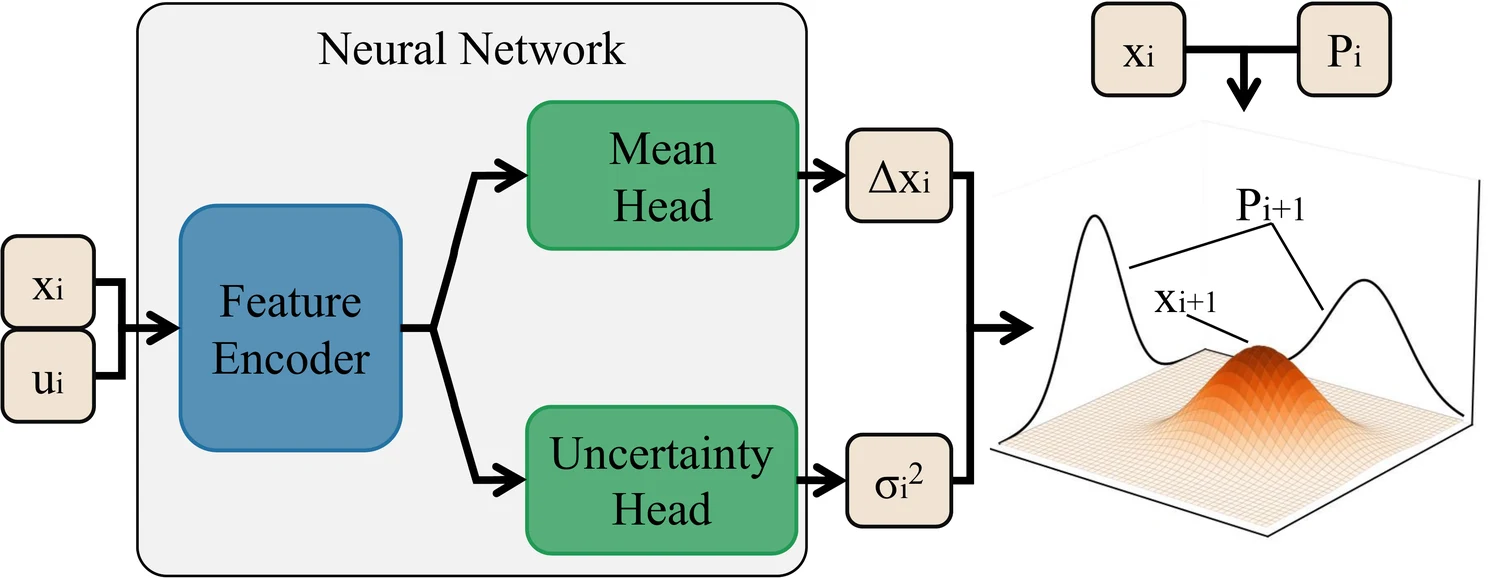
For contact-rich systems without analytical uncertainty models, interaction data provides the transitions needed to learn belief dynamics.
Planar pushing in simulation
Chef can
Mustard bottle
Real-world planar pushing
Cracker box trial 1
Cracker box trial 2
Trash truck trial 1
Trash truck trial 2
Across simulated and real-world objects, KiTe uses learned belief dynamics to favor trajectories with smaller terminal uncertainty and stronger goal-reaching reliability.