Expansion-GRR
Efficient Generation of Smooth Global Redundancy Resolution Roadmaps
Worcester Polytechnic Institute · ELPIS Lab
Accepted to IROS 2024
Global consistency
Expansion-GRR completes a closed task-space loop and returns the robot to its starting configuration.
Escaping local minima
The roadmap lets the robot detour through configuration space while following a self-crossing task-space path.
Why global consistency matters
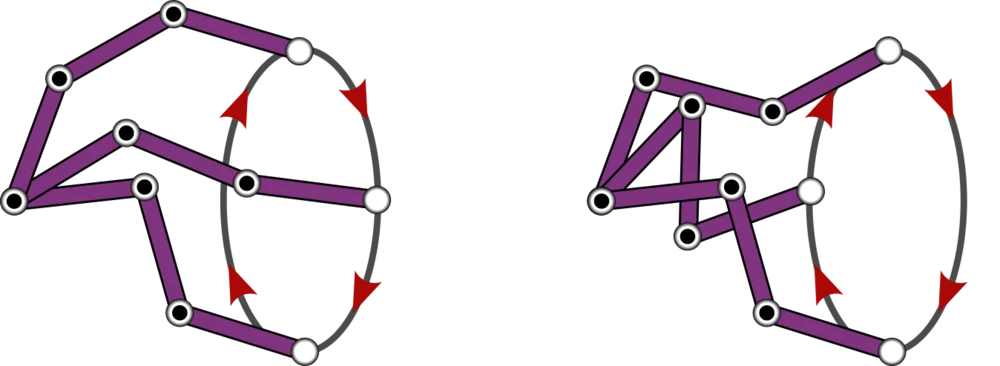
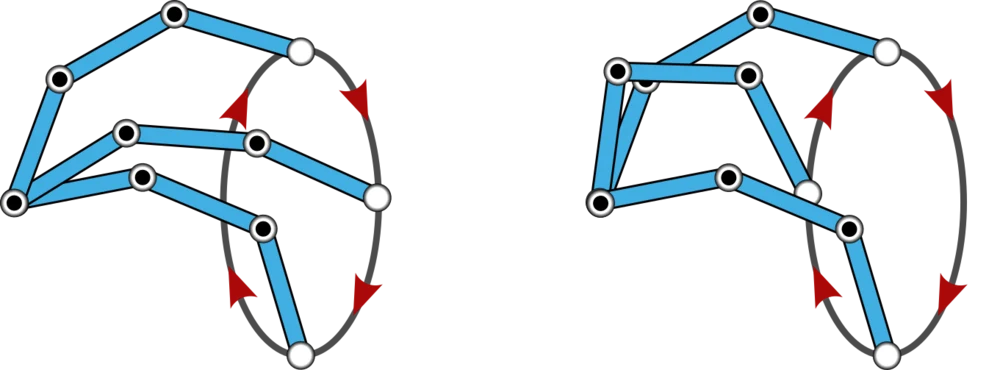
Redundant robots can reach the same task-space pose with many joint configurations. Local inverse-kinematics methods make these choices one step at a time, which can produce inconsistent motion, singularities, or local minima. Expansion-GRR precomputes a smooth global mapping from task space to configuration space so paths are repeatable, predictable, and ready for real-time use.
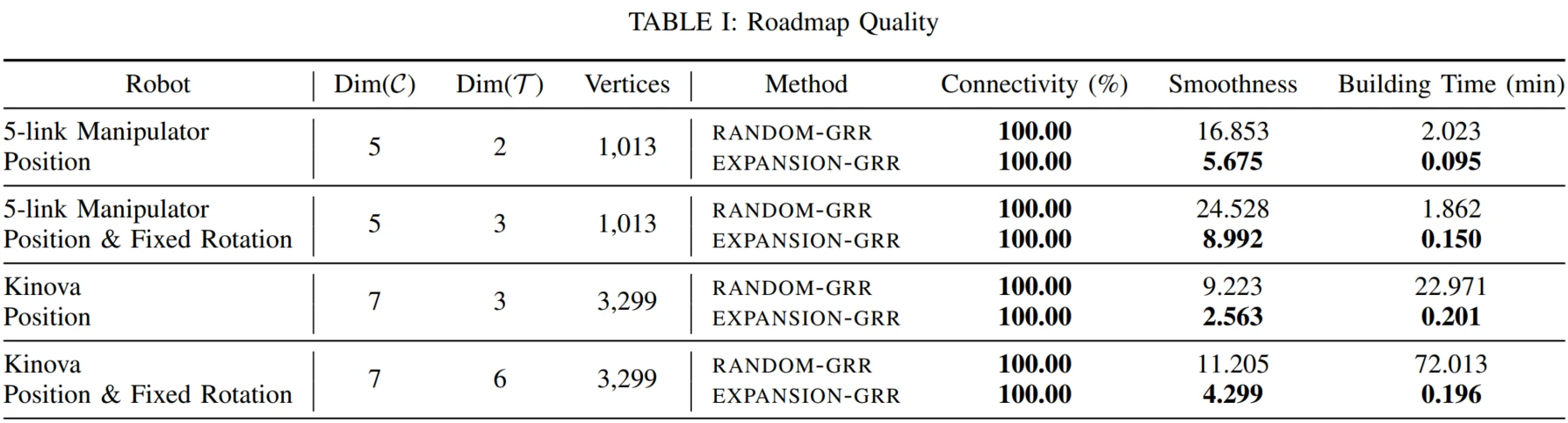
The result: GRR roadmaps generated up to two orders of magnitude faster than prior methods, with smoother paths and stronger teleoperation performance.
Continuity-aware global expansion
Expansion-GRR starts from selected configuration seeds and grows the configuration-space roadmap in breadth-first order over a discretized task-space roadmap. For each new task-space point, it computes a candidate from multiple solved neighbors, projects that candidate onto the point's self-motion manifold, and retains only edges that pass a recursive continuity check.
1. Enforce continuity between neighboring configurations
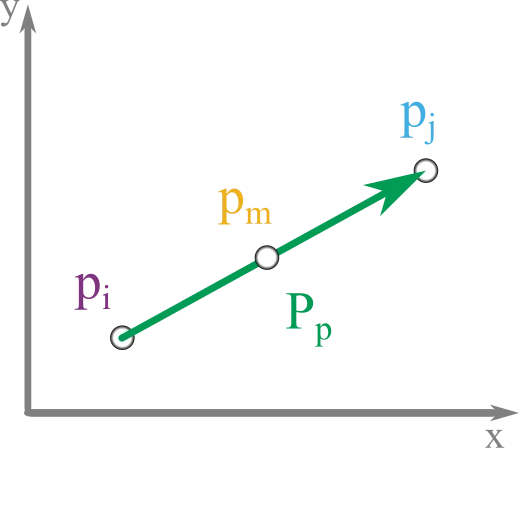
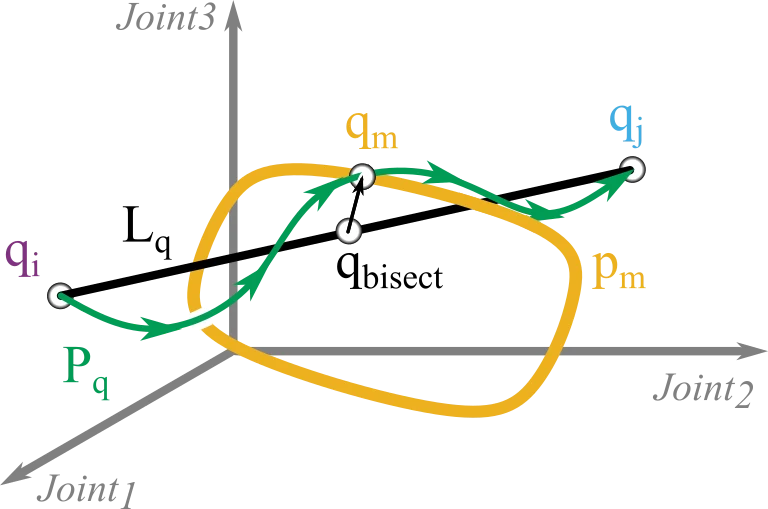
The continuity test bisects the task-space and configuration-space segments, projects the intermediate configuration onto the required self-motion manifold, checks its deviation, and repeats recursively to a chosen resolution.
2. Project from multiple neighbors
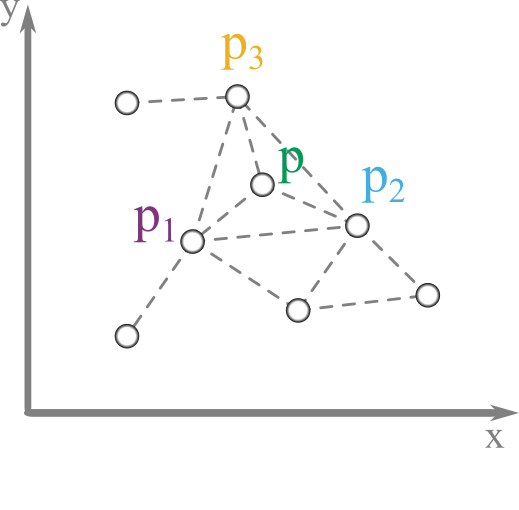
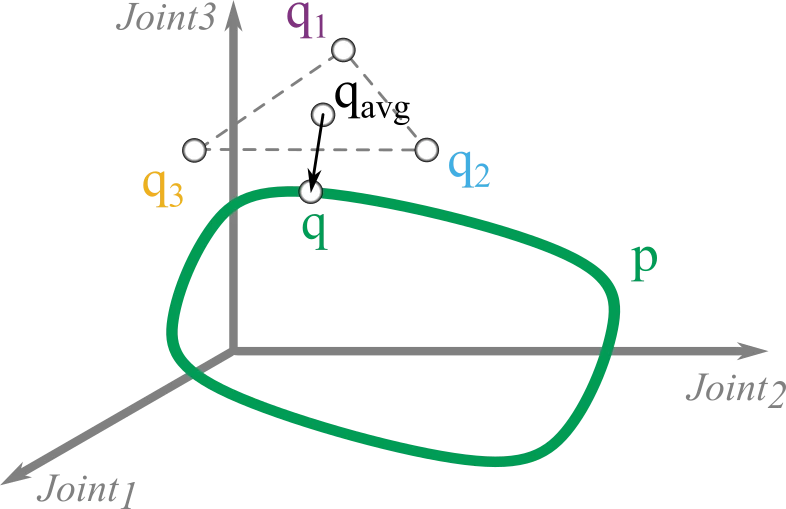
Using all nearby solved configurations reduces the bias and discontinuities that can result from projecting a single neighbor. Closer task-space neighbors receive larger weights.
3. Seed with a continuous cyclic path
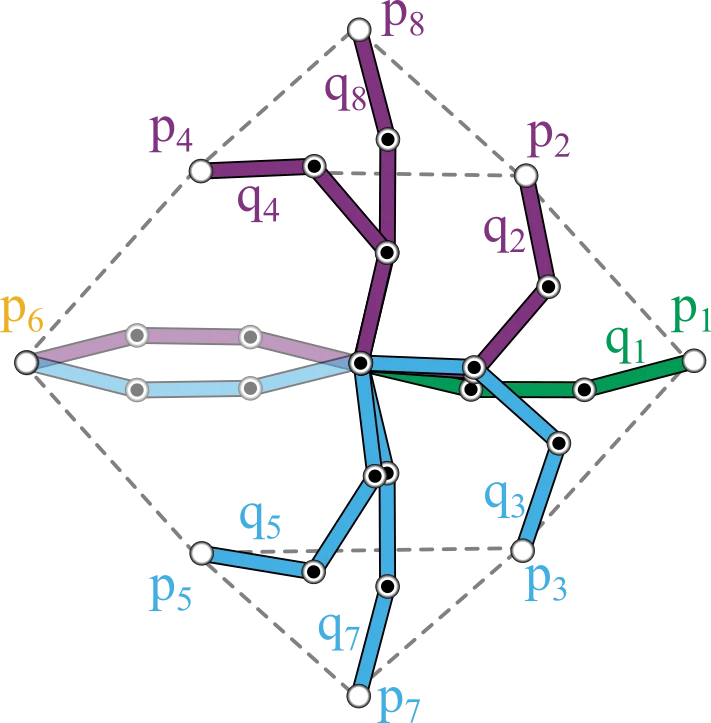
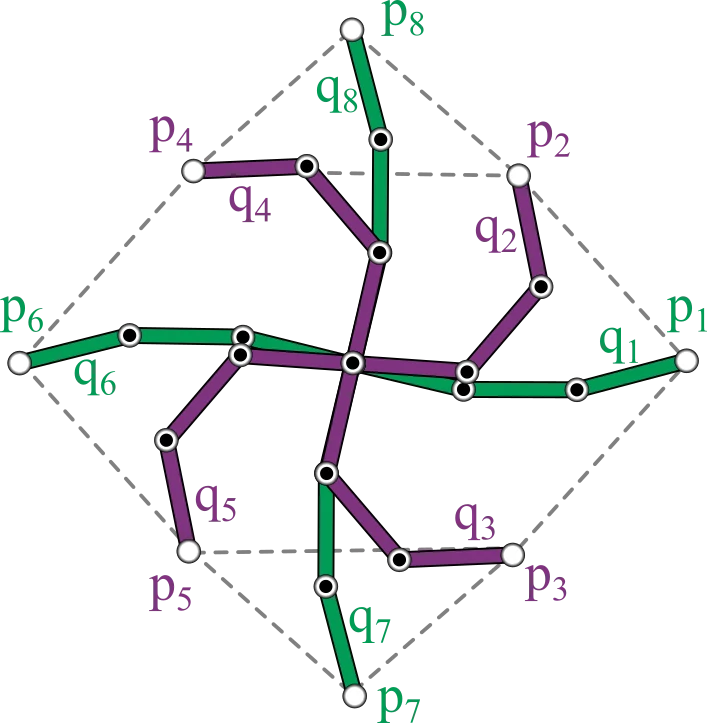
The final roadmap must support cyclic task-space paths. Seeding it with configurations sampled from one continuous cyclic path makes incompatible branches less likely and improves overall connectivity.
Global expansion: a queue traverses the task-space roadmap in breadth-first order. Each unsolved point calls the multi-neighbor projection, then the continuity test determines which configuration-space edges can be safely added.
Random line
Expansion-GRR
Random-GRR
Relaxed IK
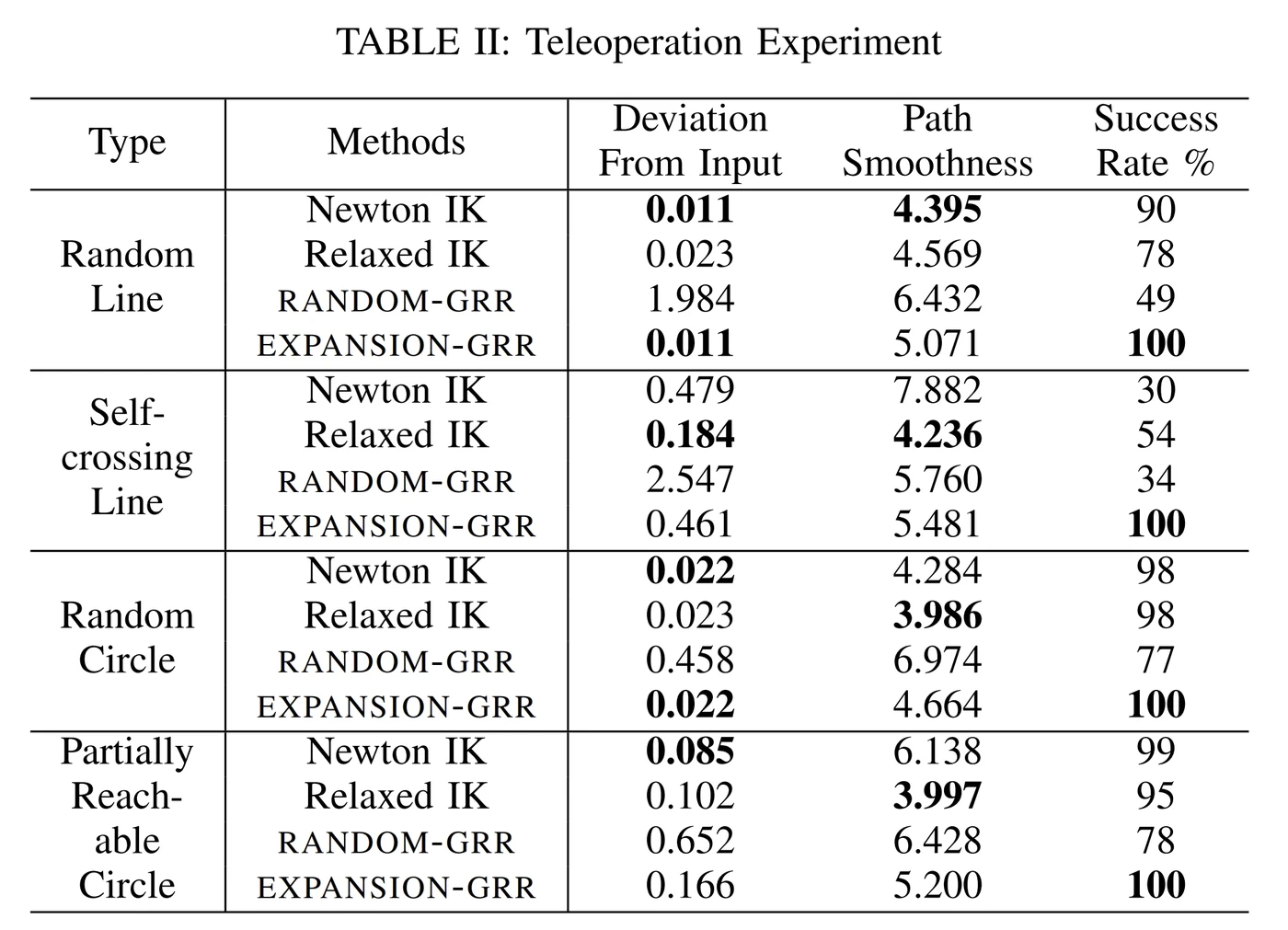
Expansion-GRR follows the commanded line with a feasible, smooth path. Random-GRR can fail when its roadmap is not sufficiently smooth, while Relaxed IK accumulates more task-space deviation.
Self-crossing line
Expansion-GRR
Random-GRR
Relaxed IK
The global roadmap provides a detour around a difficult configuration-space region; local numerical IK can become trapped in a local minimum.
Random circle
Expansion-GRR
Random-GRR
Relaxed IK
Expansion-GRR preserves global consistency over the closed loop, bringing the robot back to the same joint configuration where it started.
Partially reachable circle
Expansion-GRR
Random-GRR
Relaxed IK
When part of the command approaches an unreachable or singular region, Expansion-GRR uses roadmap connectivity to recover more reliably.
Faster roadmaps, stronger execution